Scaling Enterprise Support with AI
Turning documented knowledge into a scalable self-serve growth engine
Role
Senior Product Designer, Growth, In-App Help
Timeframe
2022–2024
Method
Support ticket and drop-off analysis; semantic retrieval evaluation with AI Search; pattern library development; cross-functional work with CS, Docs and Engineering
Outcome
69.6% product-led self-service and approximately £200k support cost reduction in 60 days
Role
Product Designer
Industry
B2B - AI
status
Live
Year
2024 - 2025
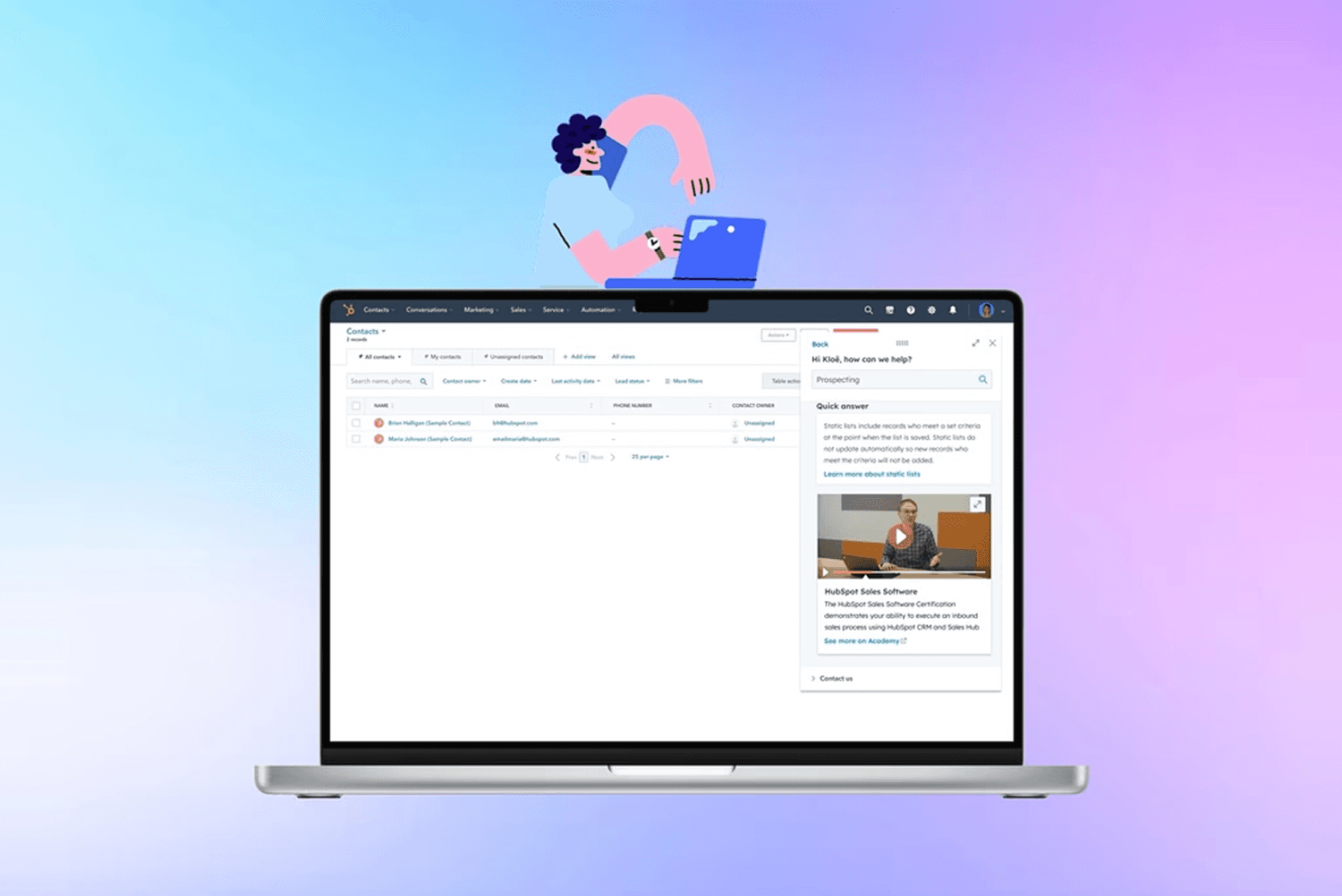
Challenge
Role: Lead Product Designer (0→1 Initiative)
Scope: Pro & Enterprise customers (166k+ monthly users)
Surface Area: In-App Help & Support Entry Points
Impact (4 weeks post-launch):
6 figure support cost savings
4,000 Enterprise tickets deflected
54% self-service resolution rate
20% overall reduction in support ticket volume
3,500+ AI-generated answers deployed across 14 languages
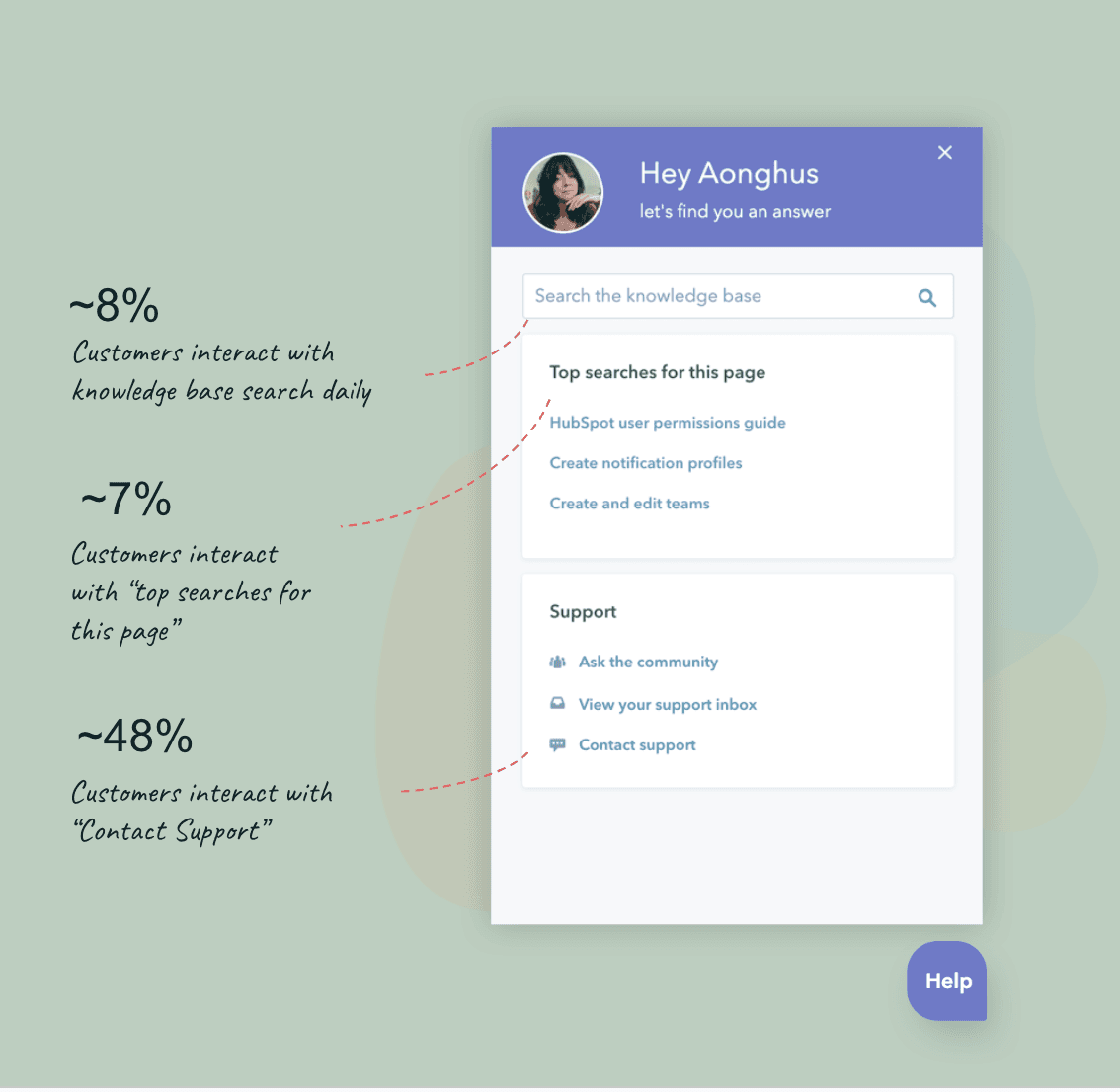
Previous experience UI:
Identifying the Growth Constraint
62% of support tickets were being resolved with existing documented solutions. This revealed a structural inefficiency:
We were paying human support costs to deliver answers we already owned.
At Pro & Enterprise scale, this wasn’t just a support problem - it was a growth and margin constraint.
As ticket volume increased, scaling support headcount would directly impact operating costs and expansion economics.
The constraint wasn’t content availability. It was content discoverability and retrieval.
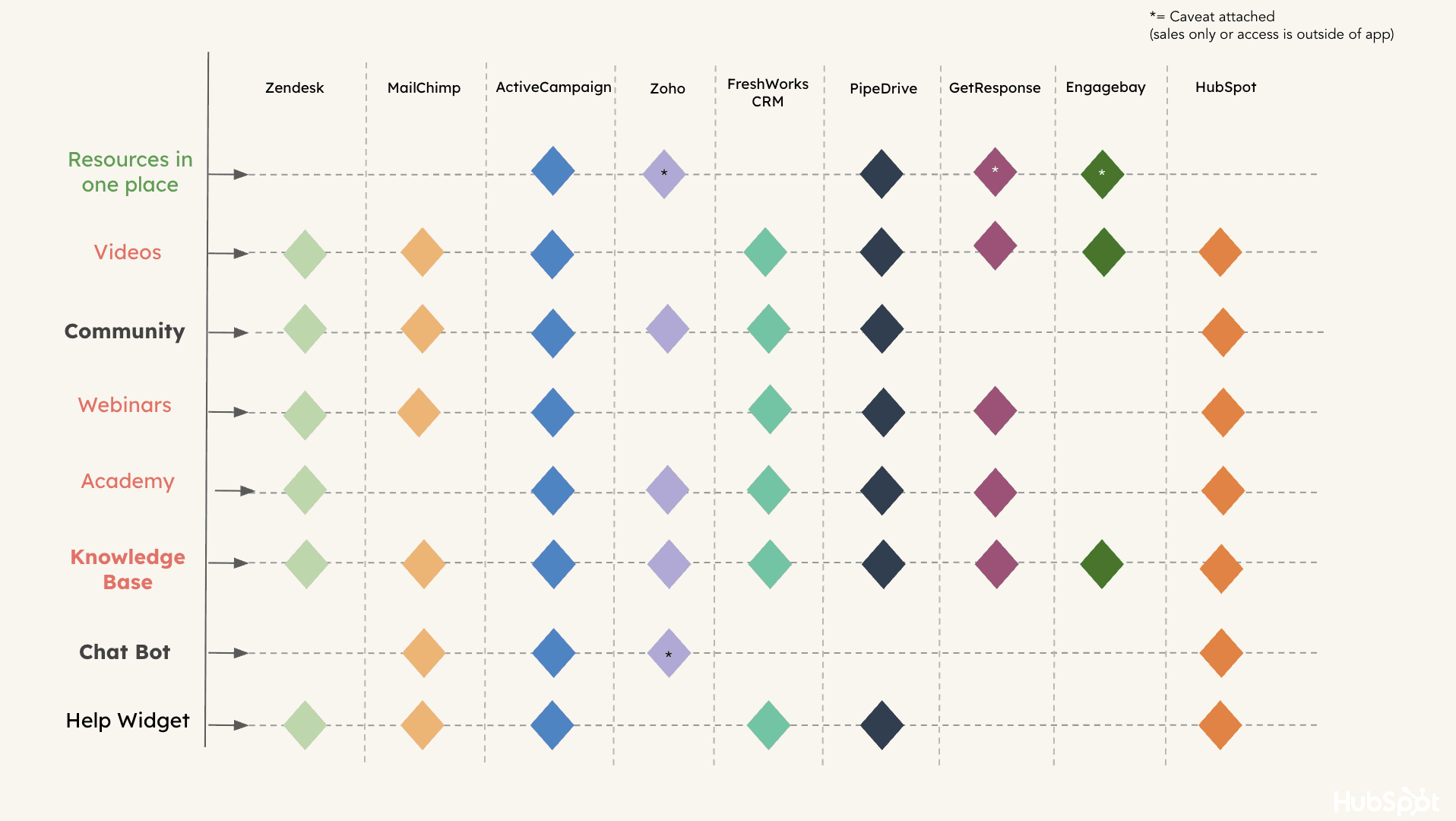
Strategic Reframe: From Help Content to Retrieval Infrastructure
Instead of writing more help documentation, I reframed the problem as: “How might we programmatically convert existing knowledge into scalable, contextual self-serve resolution?”
The opportunity was to transform help from static content into a semantic search system powered by AI. Rather than expanding the support team, we could expand retrieval intelligence.
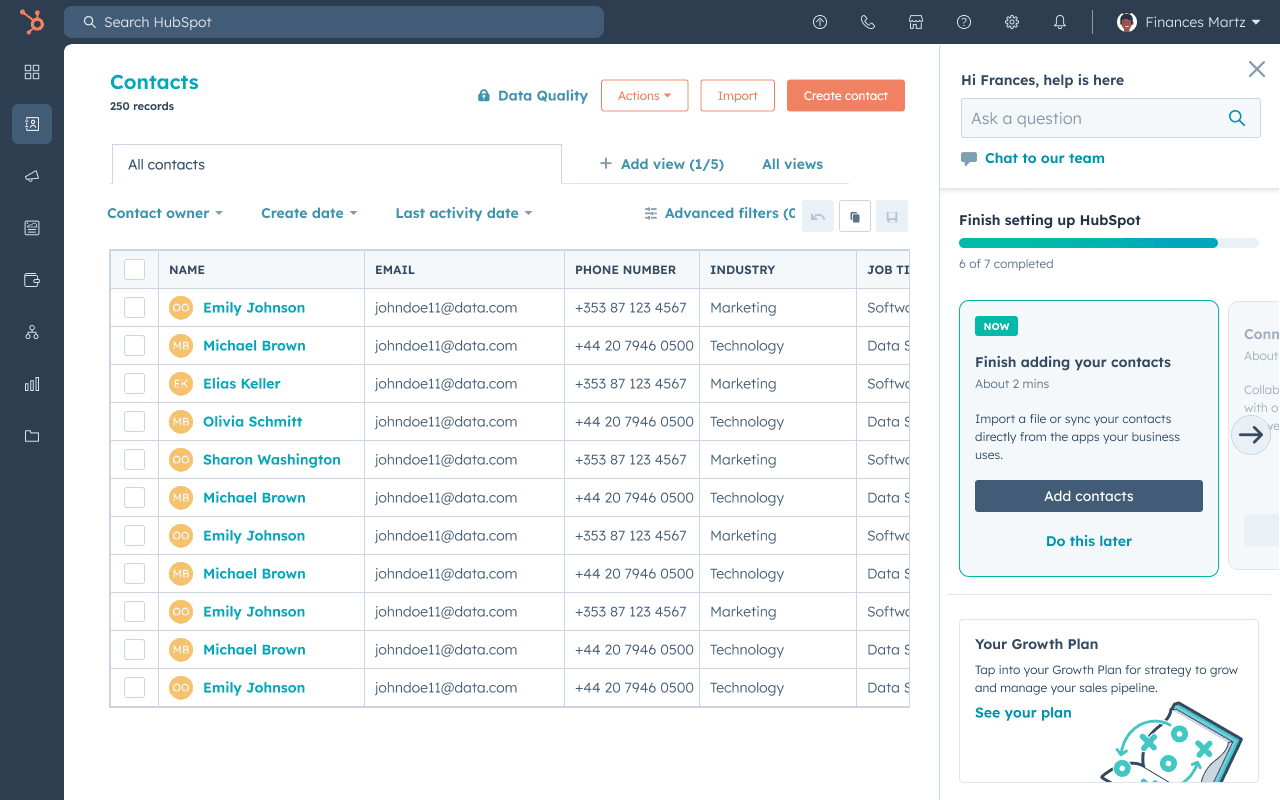
Process
Designing the AI Retrieval System
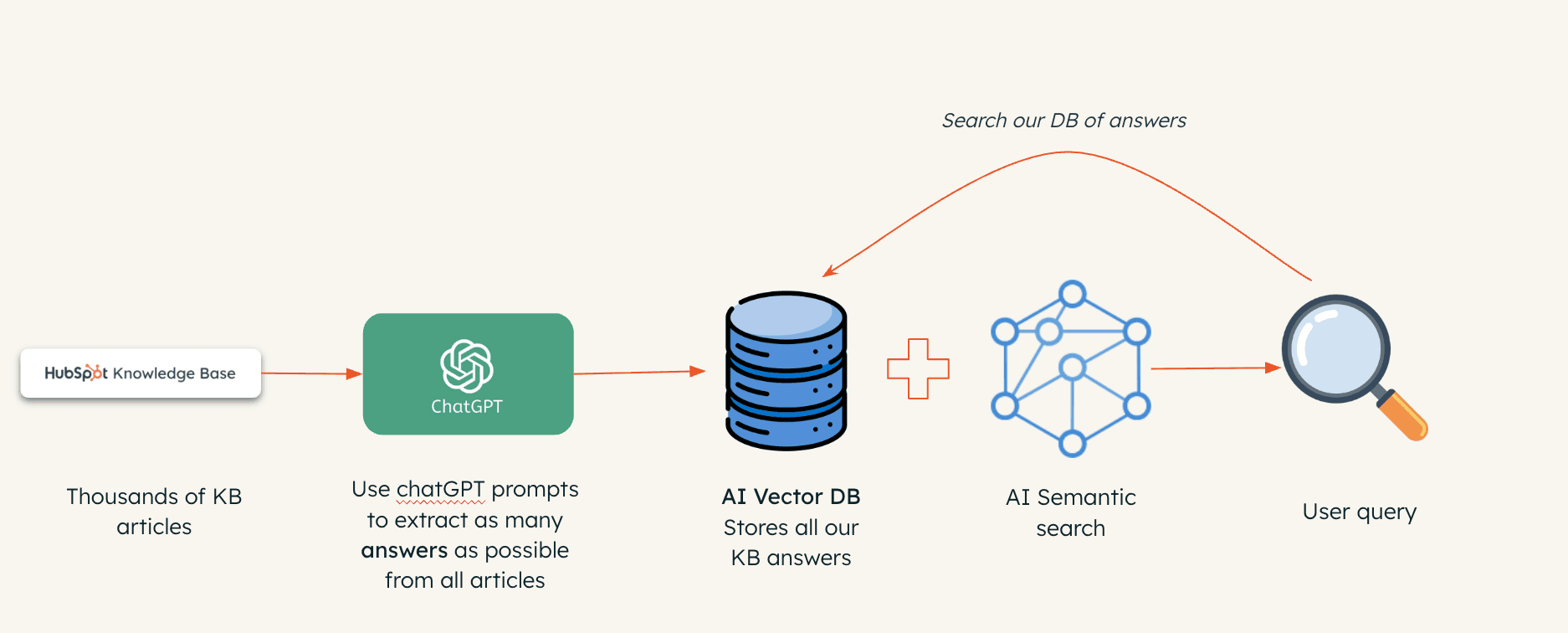
I led the design of a 0→1 AI-powered help architecture built around semantic search.
The system operated in four key layers:
1. Knowledge Structuring
I audited and deconstructed all existing KB articles, breaking them into structured micro-sections.
Each section was transformed into structured Q&A pairs using AI generation.
This converted unstructured documentation into machine-queryable units.
We expanded from 130 static answers to 3,500+ structured help responses.
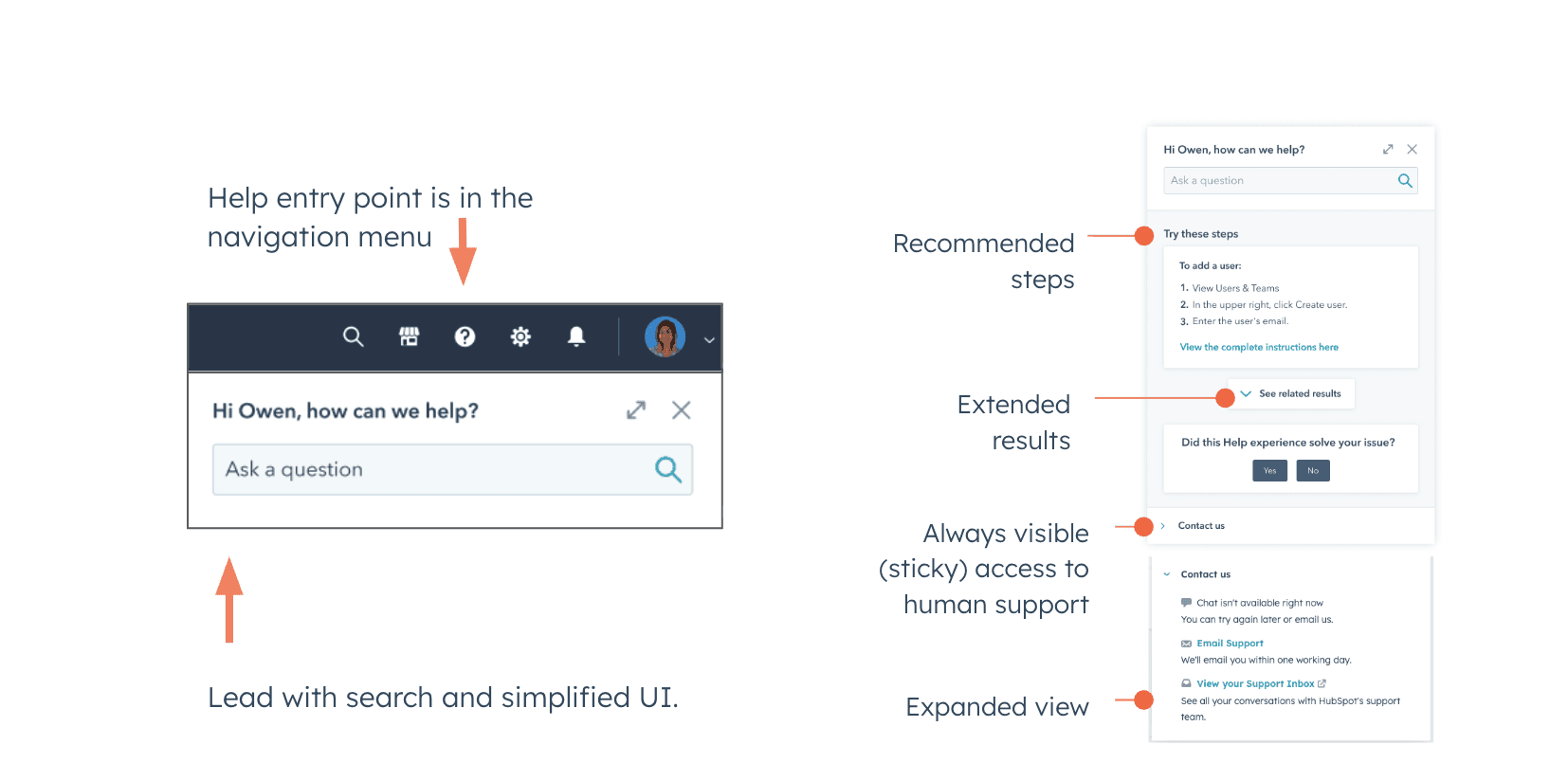
2. Vector-Based Semantic Search
All generated Q&A pairs were stored in an AI vector database.
When a user submitted a query within In-App Help, semantic search matched their intent against the structured dataset.
This replaced keyword-based search with contextual retrieval.
Users no longer needed to “guess the right phrasing” to find answers.
3. Quality Control & Risk Mitigation
One of the major risks in deploying AI-powered help was hallucination and confident misinformation. To mitigate this:• I implemented a structured peer review workflow with Product Expert Tech Writers
• All AI-generated content was validated before release
• We avoided real-time generative responses in favor of pre-validated outputsThis preserved trust while still achieving scale.
4. Localization at Scale
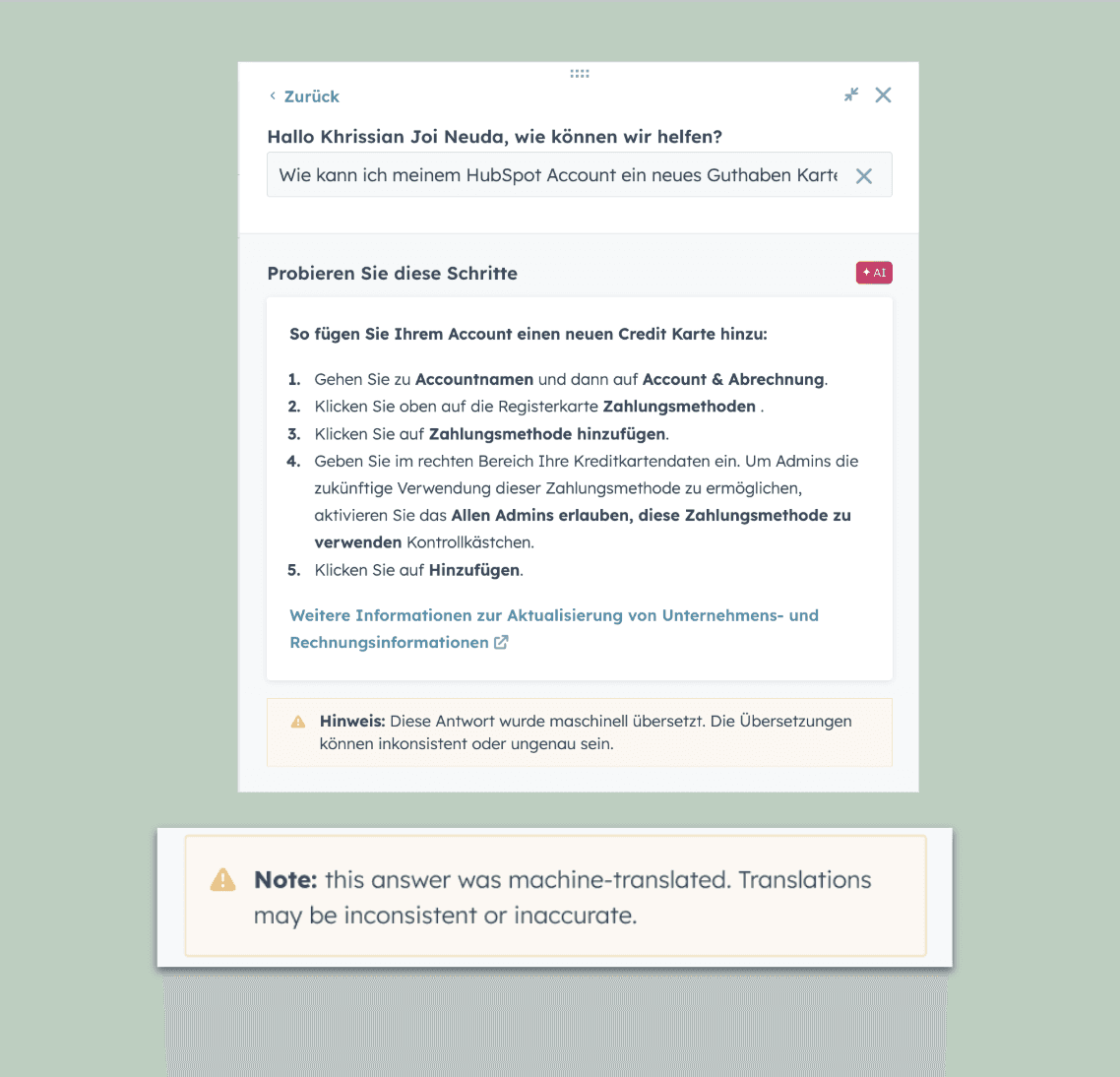
In partnership with the Localization & Systems team, we translated all 3,500 answers via machine translation.
This expanded help coverage across 14 languages without multiplying human content creation costs.
The result was scalable global support infrastructure.
Outcome
Growth & Economic Impact
This initiative directly impacted support economics and growth scalability. Within 4 weeks:
• 4,000 Enterprise tickets were deflected
• Self-service resolution reached 54%
• Overall ticket volume dropped by 20%
• Six figures in support costs were saved
The cost of doing nothing was compounding. By converting documented knowledge into an AI retrieval system, we reduced operational dependency while improving customer experience.
Strategic Tradeoffs & Learnings
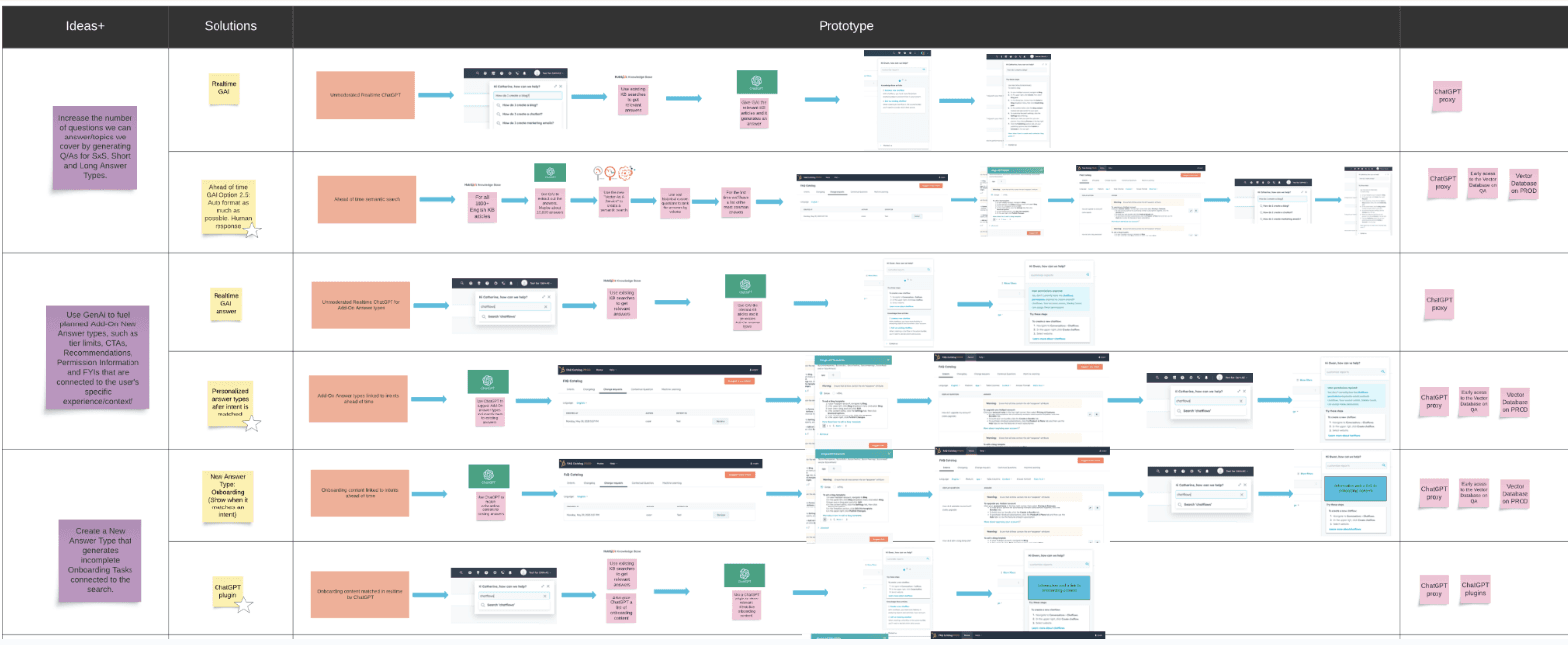
Not everything scaled linearly. Through experimentation and user research:
• Surfacing community answers reduced self-service rates > users preferred authoritative answers over peer responses
• Relocating the help entry point initially caused confusion > I introduced migration messaging and visual cues to mitigate disruption
• Real-time generative AI posed trust risks > we intentionally constrained the system to pre-validated responses
These decisions prioritized reliability and measurable self-service impact over AI novelty.
Organizational Influence
This project required cross-functional alignment across Support, Product, Localization, and Systems teams.
I:
• Defined the AI help architecture from 0→1
• Led cross-team alignment on validation workflows
• Introduced structured content governance for scalable retrieval
• Partnered with support leadership to measure ticket deflection and cost impact
• Positioned In-App Help as infrastructure — not UI
The system is now extensible beyond initial help surfaces and serves as a foundation for future AI-assisted workflows.
Reflection
The breakthrough was not adding AI. It was recognizing that documented knowledge was an underutilized growth asset. By transforming static documentation into structured, queryable intelligence, we turned support from a reactive cost center into scalable infrastructure.
My role was not only to redesign help UI. It was to identify a structural economic constraint, architect a scalable solution, align stakeholders around measurable outcomes, and deliver material business impact within a single planning cycle.
Scaling Enterprise Support with AI
Turning documented knowledge into a scalable self-serve growth engine
Role
Senior Product Designer, Growth, In-App Help
Timeframe
2022–2024
Method
Support ticket and drop-off analysis; semantic retrieval evaluation with AI Search; pattern library development; cross-functional work with CS, Docs and Engineering
Outcome
69.6% product-led self-service and approximately £200k support cost reduction in 60 days
Role
Product Designer
Industry
B2B - AI
status
Live
Year
2024 - 2025
Challenge
Role: Lead Product Designer (0→1 Initiative)
Scope: Pro & Enterprise customers (166k+ monthly users)
Surface Area: In-App Help & Support Entry Points
Impact (4 weeks post-launch):
6 figure support cost savings
4,000 Enterprise tickets deflected
54% self-service resolution rate
20% overall reduction in support ticket volume
3,500+ AI-generated answers deployed across 14 languages
Previous experience UI:
Identifying the Growth Constraint
62% of support tickets were being resolved with existing documented solutions. This revealed a structural inefficiency:
We were paying human support costs to deliver answers we already owned.
At Pro & Enterprise scale, this wasn’t just a support problem - it was a growth and margin constraint.
As ticket volume increased, scaling support headcount would directly impact operating costs and expansion economics.
The constraint wasn’t content availability. It was content discoverability and retrieval.
Strategic Reframe: From Help Content to Retrieval Infrastructure
Instead of writing more help documentation, I reframed the problem as: “How might we programmatically convert existing knowledge into scalable, contextual self-serve resolution?”
The opportunity was to transform help from static content into a semantic search system powered by AI. Rather than expanding the support team, we could expand retrieval intelligence.
Process
Designing the AI Retrieval System
I led the design of a 0→1 AI-powered help architecture built around semantic search.
The system operated in four key layers:
1. Knowledge Structuring
I audited and deconstructed all existing KB articles, breaking them into structured micro-sections.
Each section was transformed into structured Q&A pairs using AI generation.
This converted unstructured documentation into machine-queryable units.
We expanded from 130 static answers to 3,500+ structured help responses.
2. Vector-Based Semantic Search
All generated Q&A pairs were stored in an AI vector database.
When a user submitted a query within In-App Help, semantic search matched their intent against the structured dataset.
This replaced keyword-based search with contextual retrieval.
Users no longer needed to “guess the right phrasing” to find answers.
3. Quality Control & Risk Mitigation
One of the major risks in deploying AI-powered help was hallucination and confident misinformation. To mitigate this:• I implemented a structured peer review workflow with Product Expert Tech Writers
• All AI-generated content was validated before release
• We avoided real-time generative responses in favor of pre-validated outputsThis preserved trust while still achieving scale.
4. Localization at Scale
In partnership with the Localization & Systems team, we translated all 3,500 answers via machine translation.
This expanded help coverage across 14 languages without multiplying human content creation costs.
The result was scalable global support infrastructure.
Outcome
Growth & Economic Impact
This initiative directly impacted support economics and growth scalability. Within 4 weeks:
• 4,000 Enterprise tickets were deflected
• Self-service resolution reached 54%
• Overall ticket volume dropped by 20%
• Six figures in support costs were saved
The cost of doing nothing was compounding. By converting documented knowledge into an AI retrieval system, we reduced operational dependency while improving customer experience.
Strategic Tradeoffs & Learnings
Not everything scaled linearly. Through experimentation and user research:
• Surfacing community answers reduced self-service rates > users preferred authoritative answers over peer responses
• Relocating the help entry point initially caused confusion > I introduced migration messaging and visual cues to mitigate disruption
• Real-time generative AI posed trust risks > we intentionally constrained the system to pre-validated responses
These decisions prioritized reliability and measurable self-service impact over AI novelty.
Organizational Influence
This project required cross-functional alignment across Support, Product, Localization, and Systems teams.
I:
• Defined the AI help architecture from 0→1
• Led cross-team alignment on validation workflows
• Introduced structured content governance for scalable retrieval
• Partnered with support leadership to measure ticket deflection and cost impact
• Positioned In-App Help as infrastructure — not UI
The system is now extensible beyond initial help surfaces and serves as a foundation for future AI-assisted workflows.
Reflection
The breakthrough was not adding AI. It was recognizing that documented knowledge was an underutilized growth asset. By transforming static documentation into structured, queryable intelligence, we turned support from a reactive cost center into scalable infrastructure.
My role was not only to redesign help UI. It was to identify a structural economic constraint, architect a scalable solution, align stakeholders around measurable outcomes, and deliver material business impact within a single planning cycle.